
Every 17 April, Bat Appreciation Day is celebratedto recognise the invaluable ecological role of these fascinating animals and raise awareness of their importance and conservation.
Bats, or chiropterans, live alongside us yet remain little understood. What we do know is that their numbers are declining as habitats disappear.
Characteristics of bats
Chiroptera are one of the most diverse orders of mammals, second only to rodents. Around 1,300 bat species are currently known worldwide.
Most bats—approximately 70%—are insectivorous and feed on insects. Most of the remainder are frugivorous and eat fruit; only a very small percentage feed on small vertebrates such as fish, frogs or rodents.
Bats are nocturnal and have limited vision, although they are not blind as is often believed. They navigate and find food through a highly developed system of high-frequency ultrasound that is inaudible to humans.
Roles within ecosystems
Pest control: the silent heroes
The bats found in our ecosystems feed mainly on flying insects such as moths and mosquitoes.
On average, a bat consumes half its own weight in insects each night; a nursing female may consume its full body weight. This means a bat can eat around 1,000 insects every night.
Their nightly search for food helps control insects that could destroy crops, spread disease and disrupt daily life.
Some wineries are encouraging bat populations in their vineyards by installing artificial roosts, having recognised these mammals as valuable allies in controlling grapevine moths.
Seed dispersal: night-time gardeners
Bats also play an important role in seed dispersal. Fruit-eating species ingest seeds and later distribute them in their droppings, supporting forest regeneration and plant diversity and thereby contributing to healthy, stable ecosystems.
The bats in our own ecosystems are primarily insectivorous, but this wider ecological role should not be overlooked.
Pollination: allies of fertility
Although their role as pollinators is often overlooked, many bats pollinate nocturnal plants, including some cacti and tropical fruit trees. As they feed, they carry pollen between flowers, enabling plant reproduction and supporting biodiversity.
The bats present in our region are primarily insectivorous and do not perform this pollinating role here, but pollinating bats remain essential to the health of ecosystems elsewhere in the world.
Habitat loss
Bats commonly shelter in caves, fissures in rock faces and hollow tree trunks.
Unfortunately, suitable resting places are becoming scarce as urban architecture becomes less hospitable. The removal of old trees and dead wood also causes habitat loss, because these features provide refuge for bats and many other species.
Of the approximately 1,300 known species, 21 are critically endangered, 83 endangered and 109 vulnerable; data are insufficient for a further 242 species, leaving their conservation status uncertain.
Their principal threats are continuing habitat destruction, the use—and especially overuse—of pesticides, and the effects of climate change on migration and food availability.
A conservation measure: roosts in parks and natural spaces
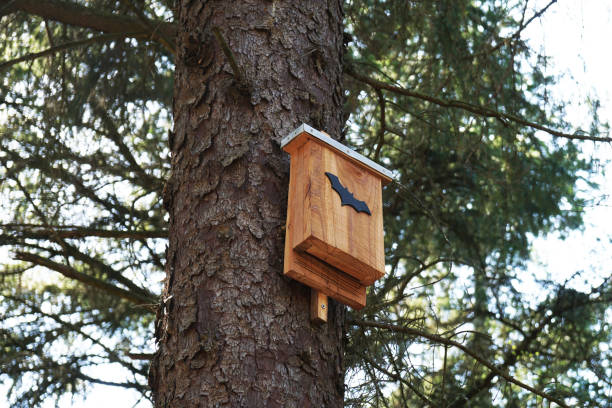
One conservation measure adopted by some cities and private initiatives is the installation of bat shelters in parks, streets and natural spaces. These shelters, made of wood, are installed on trees, posts and walls to provide daytime shelter.
This can help some species establish themselves in towns and increase their populations. However, even where these roosts are effective, bats may take months or years to feel secure in a new place and usually produce only one young each year. Consequently, population recovery takes time.
These roosts are useful only for fissure-dwelling species, not for species that live in caves.
What can we do to support bat populations?
- Learn about bats and value them properly. Many myths about them are untrue: they are not dangerous to us and are, in fact, valuable allies.
- Install artificial roosts (bat boxes) in safe places beyond the reach of cats.
- Keep artificial and natural roosts—such as cavities and breeding trees—in good condition and undisturbed.
- Increase planting in towns and cities to provide more available food.
- Avoid or reduce plant-protection treatments.
- Provide water sources near roosts in urban or rural areas so that bats can drink.
Did you enjoy this article? Would you like the Association to organise an activity about bats and nesting boxes?
Write to us at info@institutestudishorta.org.