
A living heritage of humanity
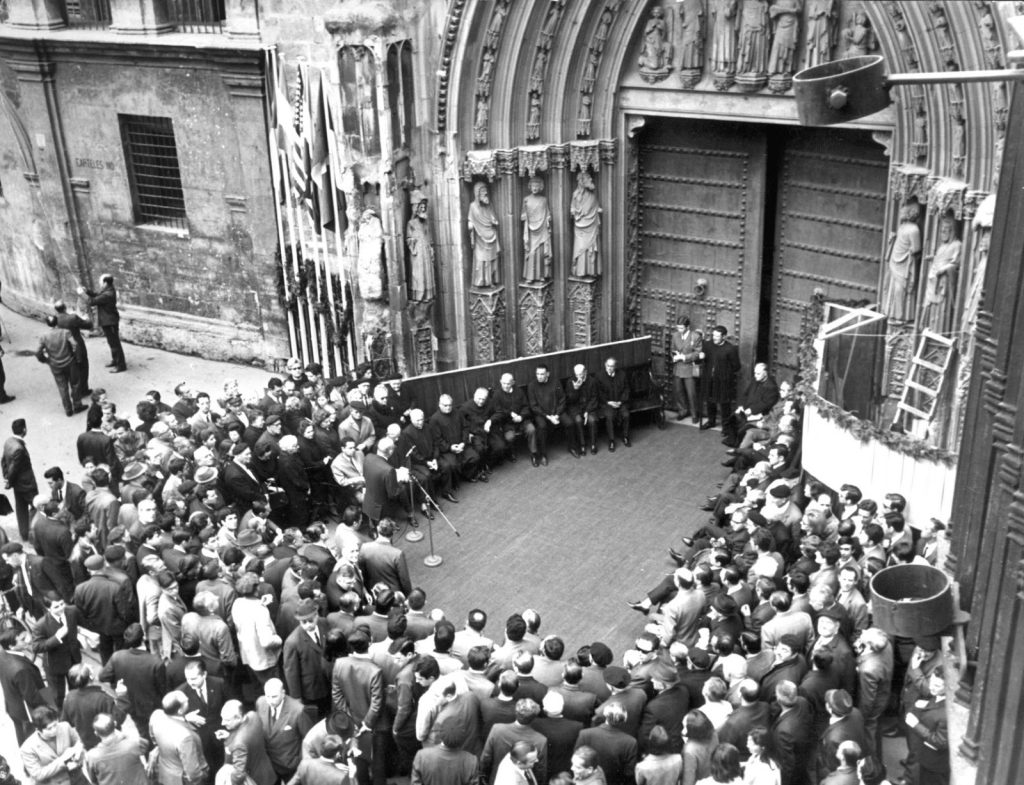
Every Thursday, precisely at noon, a group of farmers gathers outside the Apostles’ Gate of Valencia Cathedral for a public session at which disputes over the use and distribution of irrigation water in the Valencian huerta’s channels are resolved orally. There are no lawyers or professional judges—only the spoken word, experience and the trust of a community that has spent more than a thousand years resolving its own disputes over water use.
That group is the Tribunal de las Aguas de la Vega de Valencia, an institution unique in the world that was inscribed on UNESCO’s Representative List of the Intangible Cultural Heritage of Humanity in 2009 for its value as an example of traditional, democratic and sustainable justice.
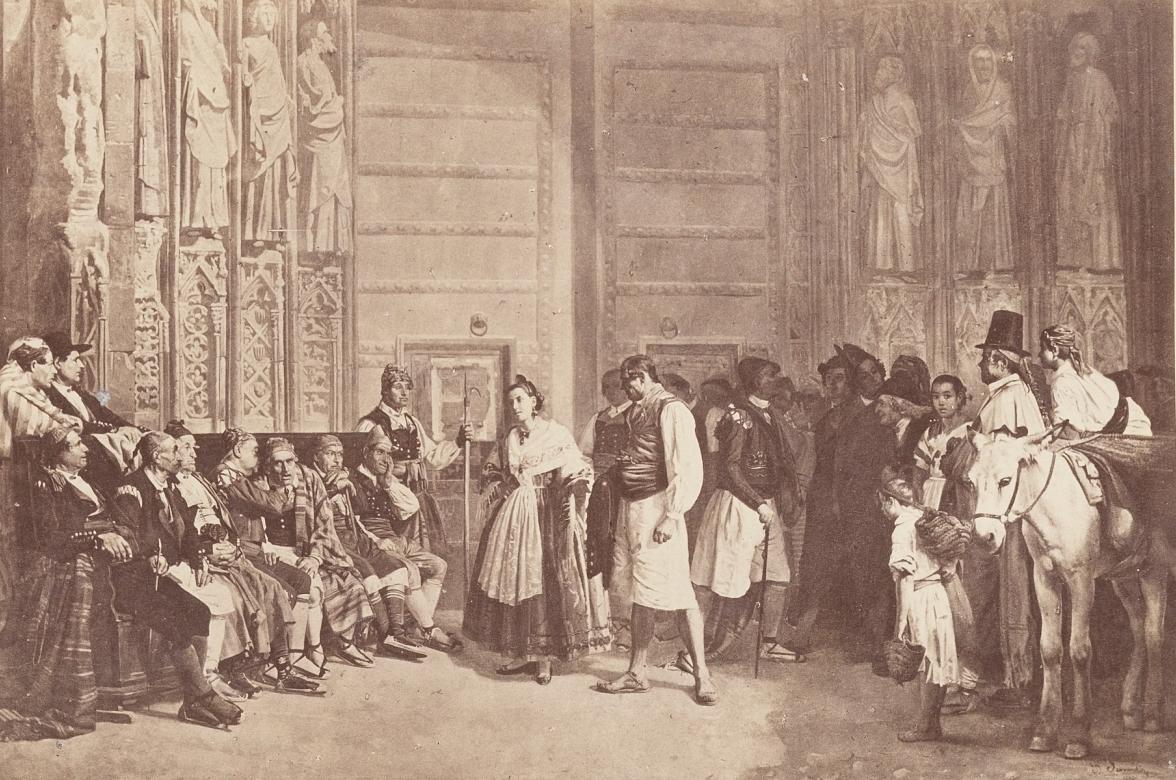
Photograph of the Tribunal, around 1879
Laurent y Minier, Juan, photographer (author of the original work: Ferrándiz y Bádenes, Bernardo)
Image copyright © Museo Nacional del Prado
Justice born of the land
The Tribunal originated in the Andalusi period, when the Valencian huerta’s irrigation system was organised. Over the centuries it has retained its structure and essence: a direct, oral form of justice, based on spoken testimony and mutual respect among farmers.
Every Thursday, the trustees —representatives elected by the communities that use the irrigation channels of the plain—sit and hear complaints from those bringing a dispute over the distribution or use of irrigation water.
The procedure is simple: the complainant presents the case, the respondent replies and, after hearing both parties, the Tribunal deliberates and delivers its decision immediately.
Everyone accepts its decisions. There are no appeals—only trust and tradition.
The huerta and water: an inseparable relationship
The Tribunal cannot be understood without the Valencia huerta, a thousand-year-old agricultural landscape created by water from the River Turia and a network of channels that distributes irrigation precisely and fairly.
This organisational model has sustained a productive, environmentally responsible and socially cohesive landscape for centuries, one that now forms part of Valencian identity.
UNESCO recognition
In 2009, UNESCO inscribed the Tribunal de las Aguas de la Vega de Valencia and the Consejo de Hombres Buenos de Murcia on the Representative List of the Intangible Cultural Heritage of Humanity as the entry “Tribunales de regantes del Mediterráneo español”.
This international recognition acknowledges both institutions’ ability to keep alive forms of self-government, dialogue and sustainable water management passed down from one generation to the next.
More information:
A legacy looking to the future
Today, the Tribunal de las Aguas remains an example of civic participation, environmental respect and community management of natural resources.
Its continuity shows that traditional solutions can inspire responses to today’s water and climate challenges.
Keeping its memory alive, sharing its history and introducing it to new generations is a way to defend not only cultural heritage, but also the balance between land, water and people.