
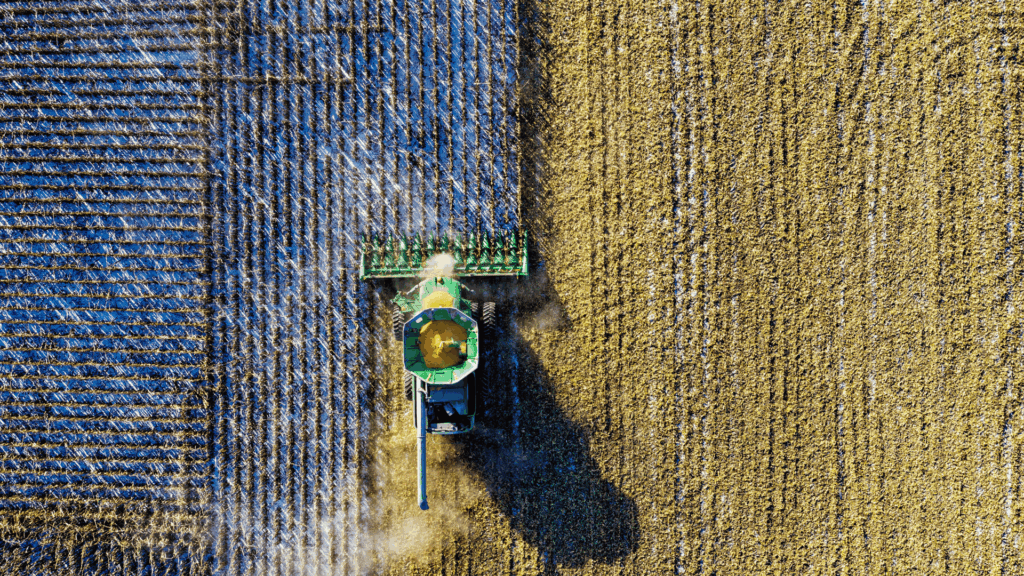
Digitalisation is transforming agriculture around the world. Mobile applications, management platforms, sensors, satellite imagery and digital traceability systems are already part of daily life on many farms.
But technology alone does not guarantee better working conditions or greater social justice.
Through the AgroTech por los Derechos Humanosproject, led by the Associació Institut d’Estudis de l’Horta Valenciana, we wanted to go a step further and ask:
👉 How can digitalisation make farming genuinely fairer, more inclusive and more dignified for the people who work in it?
To answer this question, we produced a study of international good practices, examining which features of different initiatives improve accessibility and respect for labour rights.
Why look at other countries?
The agricultural sector faces common challenges in many parts of the world, including:
An ageing rural population
The digital divide
Insecure working conditions
Unequal access to technology
Analysing international good practices allows us to learn from tested experience and identify models that can inspire policies, training programmes and tools adapted to the Spanish context.
Seven inspiring experiences
Of all the cases analysed, the following seven good practices were selected to represent different regions and governance models:
1. Digital Experimental Fields
Germany (Europe)
A network of agricultural campuses across Germany where farmers, researchers and technology companies test digital solutions directly in production settings.
Each experimental field focuses on a particular theme—data management, sustainability, collaborative working or energy efficiency, for example—and shares its findings on a public platform.
https://www.bmleh.de/EN/topics/digitalisation/digitalisation_node.html
2. JoinData Cooperative Platform
The Netherlands (Europe)
A national agricultural data-exchange platform based on a cooperative model. It enables farmers to control access to and use of their data within a secure, regulated environment. It ensures ethical and transparent governance of agricultural data and reduces dependence on technology providers.
3. Signpost Programme
Ireland (Europe)
A network of demonstration farms and technical advice that combines technological innovation, environmental sustainability and well-being at work.
It provides farmers with personalised support through digital advisers and free practical training.
https://teagasc.ie/environment/climate-change–air-quality/signpost-programme/
4. Digital Green
India (Asia)
A participatory video-training model in which farmers record and share content in their local language about good agricultural practices or resource management. The videos are distributed through community networks and local screenings facilitated by field staff who support the learning process.
5. CCD-AD Semear Digital
Brazil (South America)
A programme that aims to reduce the rural digital divide in farming communities by installing technological infrastructure, providing digital-skills training and developing solutions adapted to local needs.
6. “Manos Campesinas” label
Chile (South America)
An official certification created by the Instituto de Desarrollo Agropecuario (INDAP), part of Chile’s Ministry of Agriculture, to identify and distinguish products made by family farmers. It aims to highlight the work of small producers, guarantee digital product traceability and encourage short supply chains.
7. Hello Tractor
Nigeria (Africa)
A technology platform offering a shared agricultural-machinery service. It connects tractor owners with small farmers who cannot afford to buy one. Farmers request mechanisation services through a mobile application and SMS system, while owners use GPS and sensors to manage the location, use and maintenance of their tractors in real time.
Lessons for the Spanish context
This analysis seeks to identify lessons that can be transferred to Spain’s agricultural sector, such as:
- Creating pilot spaces where technology can be tested before reaching the market.
Supporting cooperative data platforms.
-
Providing practical digital training adapted to each area.
-
Using digital tools to recognise the value of agricultural work.
The study’s main conclusion, however, is clear: digitalisation can improve agriculture, but only when it is designed around people.
When technology is combined with rights, participation and support, the result is a stronger, fairer and more sustainable agricultural sector.
To learn more, read the full report at:
Assessment report Assessment report on digitalisation and labour rights in Spanish agriculture
Funded by:
