
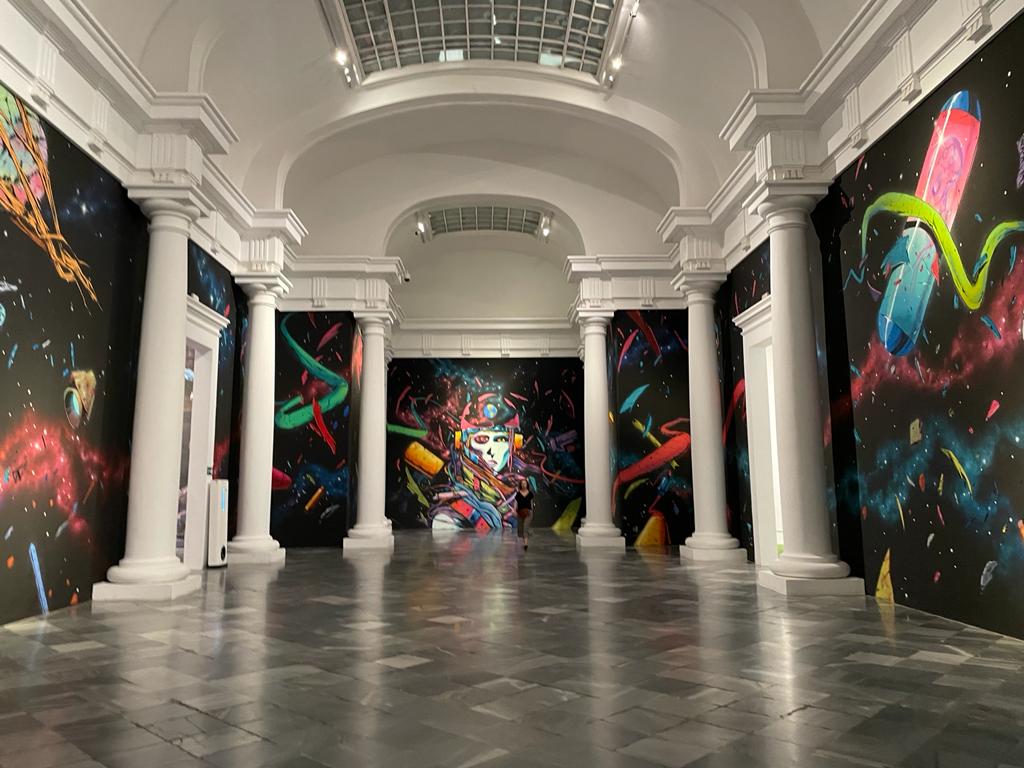
The Centre del Carme Cultura Contemporània (CCCC) is helping to raise awareness of the environmental threats facing ecosystems and people through its exhibition ‘Emergency on Planet Earth’.
This innovative exhibition presents urban art as a driver of change. Its twelve spaces address global warming, climate change, pollution, deforestation, soil degradation, depletion of energy resources, water scarcity, biodiversity loss, relentless waste generation, overpopulation, marine pollution and space debris.
The Association has, naturally, visited the exhibition, which comprises large murals created in situ and original sculptures. We will not reveal them here in case you decide to visit.
The exhibition also devotes a room to linking the issues presented with the Sustainable Development Goals (SDGs), and showcases initiatives through which organisations and centres are helping to halt environmental degradation.
This exhibition will be available for free viewing until 4 September 2022, so we encourage you to visit the CCCC if you have the opportunity. The participating urban artists convey and warn of serious environmental problems in a highly visual, colourful and striking way. It is an essential visit.
Besides recommending the exhibition, this post reflects on one particular question without losing sight of the others: how a commitment to agroecology can drive change.
Agroecology means applying practices designed to create, develop and manage sustainable farming systems . Unlike conventional systems, this approach examines how the components of an ecosystem—plants, animals, people and the environment—interact, while promoting biodiversity and the resilience of productive systems.
Conventional agriculture often seeks higher yields without accounting for environmental impacts such as soil degradation, overuse and pollution of aquifers and water bodies, and reliance on synthetic or toxic plant-protection products. Agroecology instead supports food production while conserving its essential natural resources: soil, water and biodiversity.
This is illustrated in several parts of the exhibition ‘Emergency on Planet Earth’ (SPOILER ALERT).
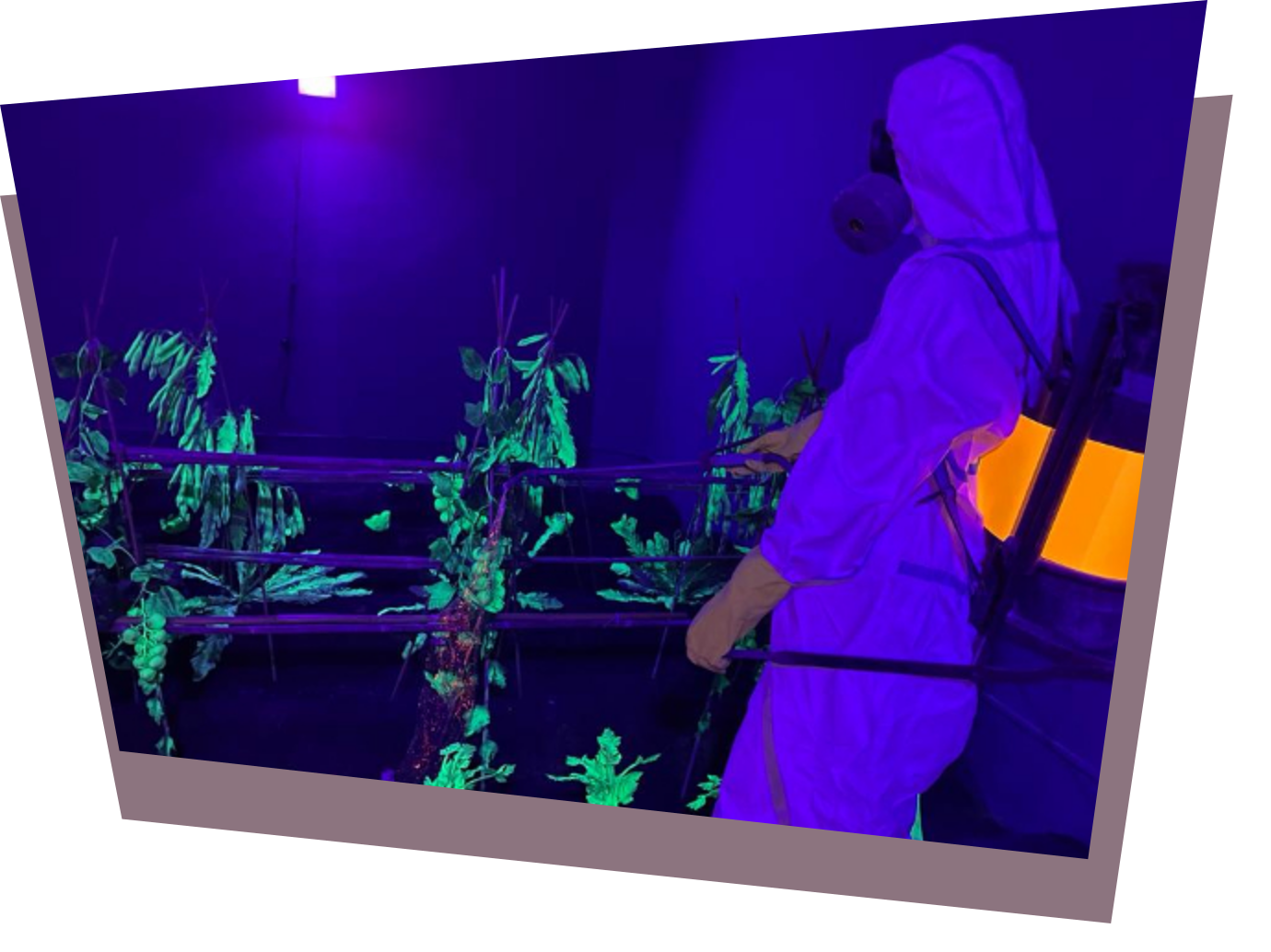
The most direct example is the ‘Soil Degradation’ room. Under ultraviolet light, a person in sealed protective clothing sprays crops, revealing the chemical residues that remain on vegetables and contaminate the soil.
The Association promotes agroecological alternatives such as companion planting, incorporating flowering and aromatic species, crop rotation and preparations made from natural ingredients. These options reduce environmental impacts on several fronts while supporting biodiversity.
The Association therefore considers that agroecology can be a driver of environmental change , and here we relate that idea to the exhibition’s other rooms, in addition to the ‘Soil Degradation’ room discussed above:
Reducing inputs and packaging, including plant-protection products, helps cut waste that might otherwise become space debris (the main room, ‘Space Debris’), and prevent waste from polluting the seas (the ‘Marine Debris’ room, which addresses marine litter).
Replacing synthetic plant-protection products with alternatives reduces greenhouse-gas emissions both directly during use and indirectly through manufacture and transport. Farming would therefore have less impact on climate change (the ‘Climate Change’ room) or global warming (the ‘Global Warming’ room), and would also help address biodiversity loss (the room entitled ‘Biodiversity Loss’).
Agroecology also supports better water management (the ‘Water Management’ room) and reduced reliance on fossil fuels (the ‘Fossil Fuels’ room).
It follows that applying the principles of agroecology can reduce humanity’s impact on ecosystems and help make our actions sustainable and resilient.
An unsustainable way of life—or an unsustainable food-production system—cannot endure.
We must therefore lead the change ourselves.